
01The challenge
Why does natural gas need molecular sieve dehydration?
Water in natural gas forms hydrates and ice that block pipelines, valves and cryogenic exchangers, and it drives corrosion when CO₂ or H₂S are present. Glycol units cannot reach the dryness needed for LNG and NGL recovery, where water must stay below 0.1 ppmv. An under-performing dryer means hydrate plugging, cold-box shutdowns and lost production.
Our solution
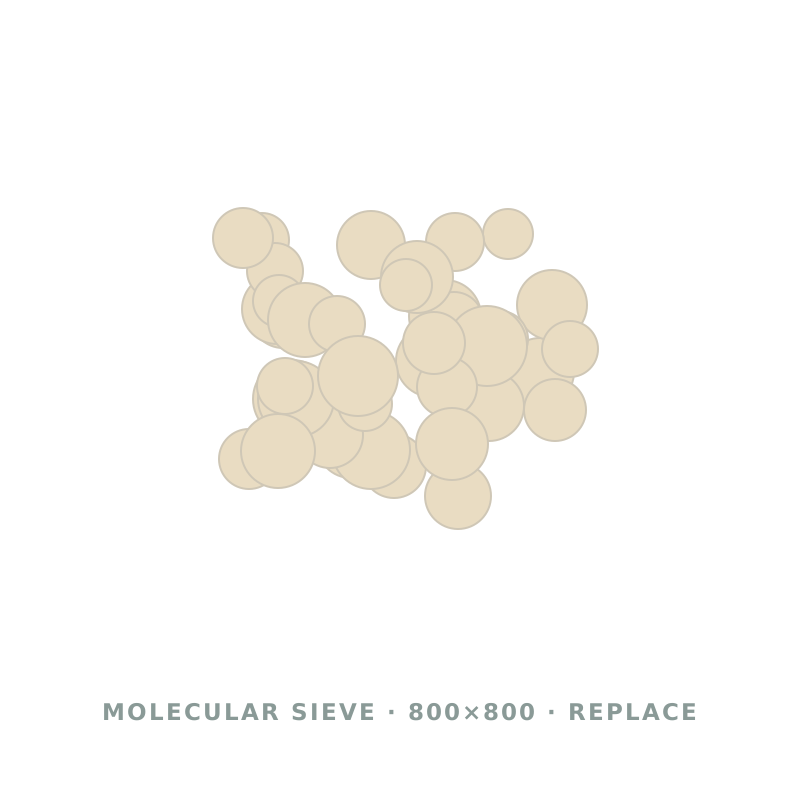
- Grade: 4A molecular sieve, 3.0–5.0 mm beads or 1/8″ pellets, as the main drying layer; 3A to minimise COS formation when H₂S and CO₂ are present; 13X when mercaptans must also be removed.
- Regeneration: thermal swing with hot dry gas at 250–290 °C; typical bed life 3–5 years, depending on feed quality and regeneration control.
- Outlet spec: H₂O below 0.1 ppmv (dew point around −100 °C), ready for LNG, cryogenic NGL recovery and pipeline export.
02Recommended grades
Which products does a gas dryer need?


03On site
Installed in plants like yours

Which molecular sieve is best for natural gas dehydration?
4A is the standard choice. Use 3A where H₂S and CO₂ are present and COS formation must be minimised, and 13X when mercaptans also need to be removed.
How dry can molecular sieve make natural gas?
A well-designed molecular sieve dryer brings water below 0.1 ppmv, a dew point of about −100 °C, which LNG and cryogenic NGL plants require.
What regeneration temperature is used?
Beds are usually regenerated with hot, dry gas at 250–290 °C, followed by a cooling step before the bed returns to adsorption.
How long does a molecular sieve bed last?
Typically 3–5 years. Liquid carry-over, heavy hydrocarbons and poor regeneration control shorten bed life; good inlet separation extends it.

Sizing a new dryer or replacing a sieve charge?
Send your gas flow, pressure, temperature and inlet water content — we reply with a grade, bed loading recommendation and quote within 24 hours.