
Home › Applications › Industrial gases
Industry
Adsorbents for Industrial Gases
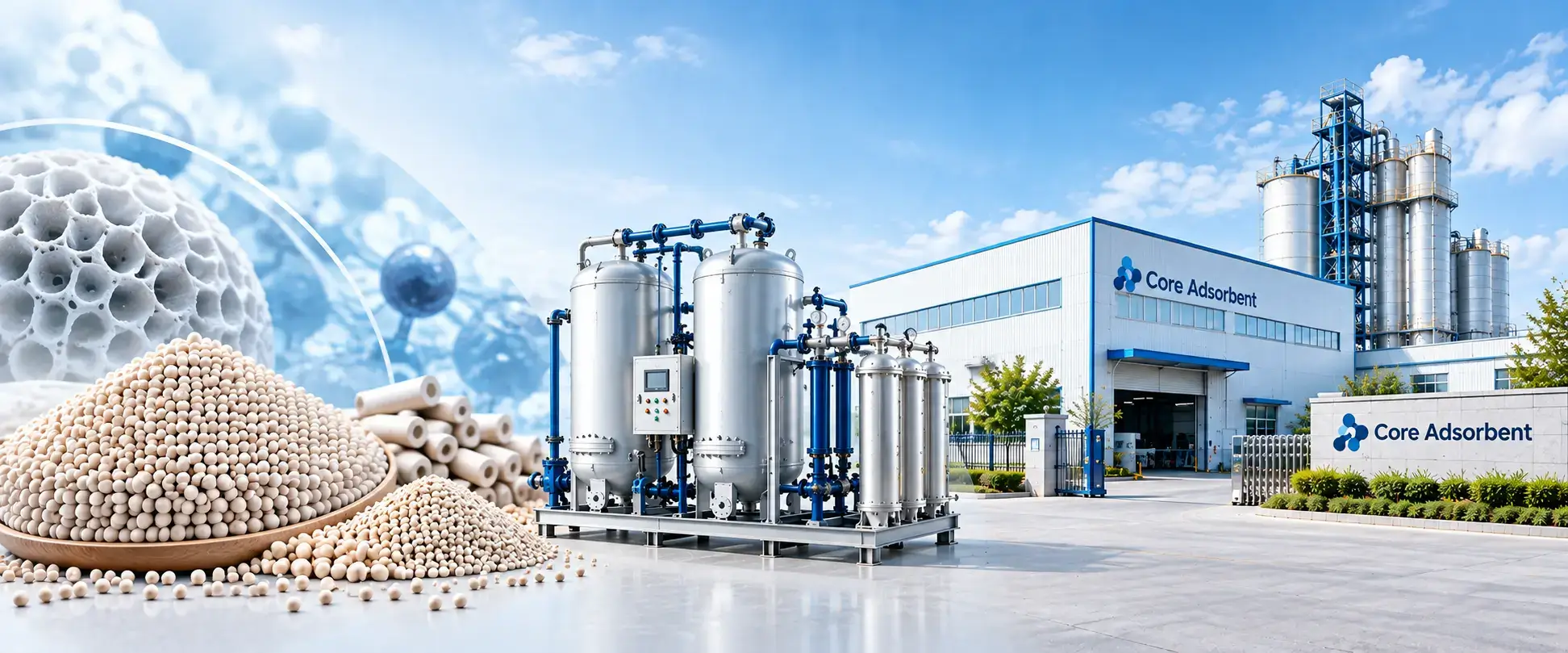
Core Adsorbent supplies molecular sieves and activated alumina for air separation pre-purification, PSA and VPSA oxygen, PSA hydrogen and compressed air drying.
< 1 ppm
CO₂ into the cold box (typical)
≥ 6.2
Li-LSX N₂/O₂ selectivity
5 grades
13X APG, CaX, Li-LSX, 5A, alumina
15–35 days
Delivery time
01 Overview
Which adsorbents do industrial gas plants use?
Industrial gas plants use molecular sieves in three ways: to remove water and CO₂ before cryogenic air separation, to separate nitrogen from air in PSA and VPSA oxygen units, and to purify hydrogen by PSA. Activated alumina dries compressed air and protects the main adsorbent layers.
02 Product solutions
Adsorbent solutions for industrial gases
Every solution page tagged to this application appears here automatically.
-
Solution
Molecular Sieve for N₂O Removal in Air Separation
View solution →: Molecular Sieve for N₂O Removal in Air SeparationCore Adsorbent supplies CaX molecular sieve as an added layer in air pre-purification units, removing N₂O and trace hydrocarbons that standard 13X lets through.
03 Challenges
What limits an industrial gas plant?
Four problems decide product purity, power use and adsorbent life.
CO₂ and ice in the cold box
CO₂ or water that slips through the pre-purifier freezes in the main heat exchanger.
N₂O and hydrocarbons
N₂O and trace hydrocarbons pass a standard 13X layer and can accumulate in cold sections.
Oxygen yield and power
In PSA and VPSA units the sieve’s N₂/O₂ selectivity sets oxygen output per kWh.
Dust and bead wear
Pressure cycling wears weak beads; dust damages valves and filters.
04 How it works
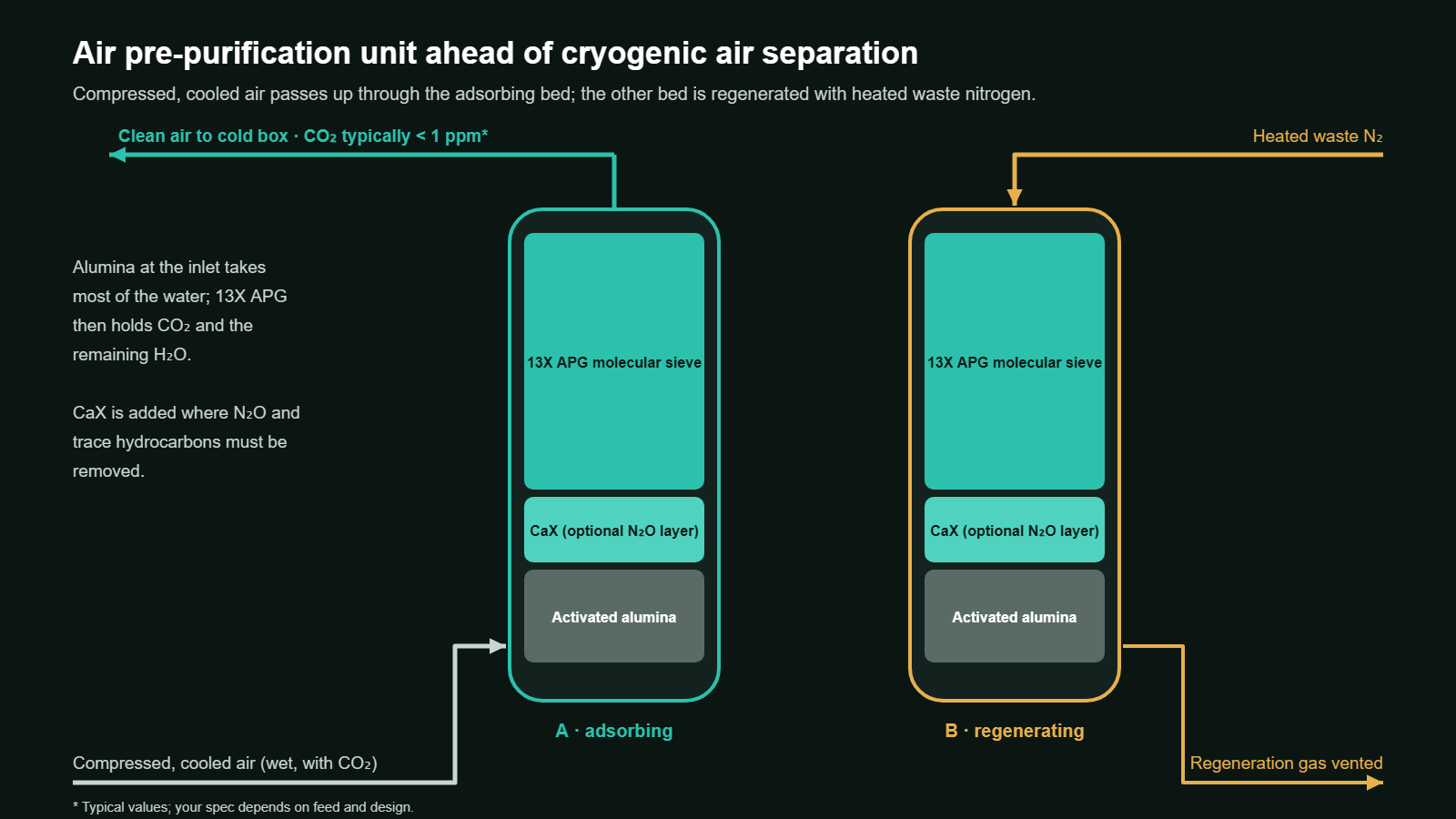
A typical air pre-purification unit
< 1 ppm
CO₂ typically allowed into the cold box
≥ 8.0 ml/g
13X APG static CO₂ at 2.5 mmHg, 25 °C
≥ 6.2
Li-LSX N₂/O₂ selectivity
−70 °C
Pressure dew point reachable with 4A
Typical industry values and our product data. Compressed air purity classes are defined in ISO 8573-1.
05 Selection guide
Industrial gas adsorbent selection table
Full specifications are on each product page.
| Product | Use in industrial gases | Key figure |
|---|---|---|
| 13X APG Molecular Sieve | Main layer in air pre-purifiers | Static CO₂ ≥ 8.0 ml/g at 2.5 mmHg |
| CaX Molecular Sieve | N₂O and trace hydrocarbon removal | Static N₂ ≥ 18.0 ml/g |
| Molecular Sieve for Oxygen Concentrator | PSA / VPSA and medical oxygen | N₂/O₂ selectivity ≥ 6.2 |
| 13X Molecular Sieve | Industrial oxygen PSA; CO₂ and water | Static CO₂ ≥ 18.5 % |
| 5A Molecular Sieve | PSA hydrogen purification | 5 Å pore |
| Activated Alumina Desiccant | Inlet drying; compressed air dryers | Regenerable desiccant |
06 Recommended products
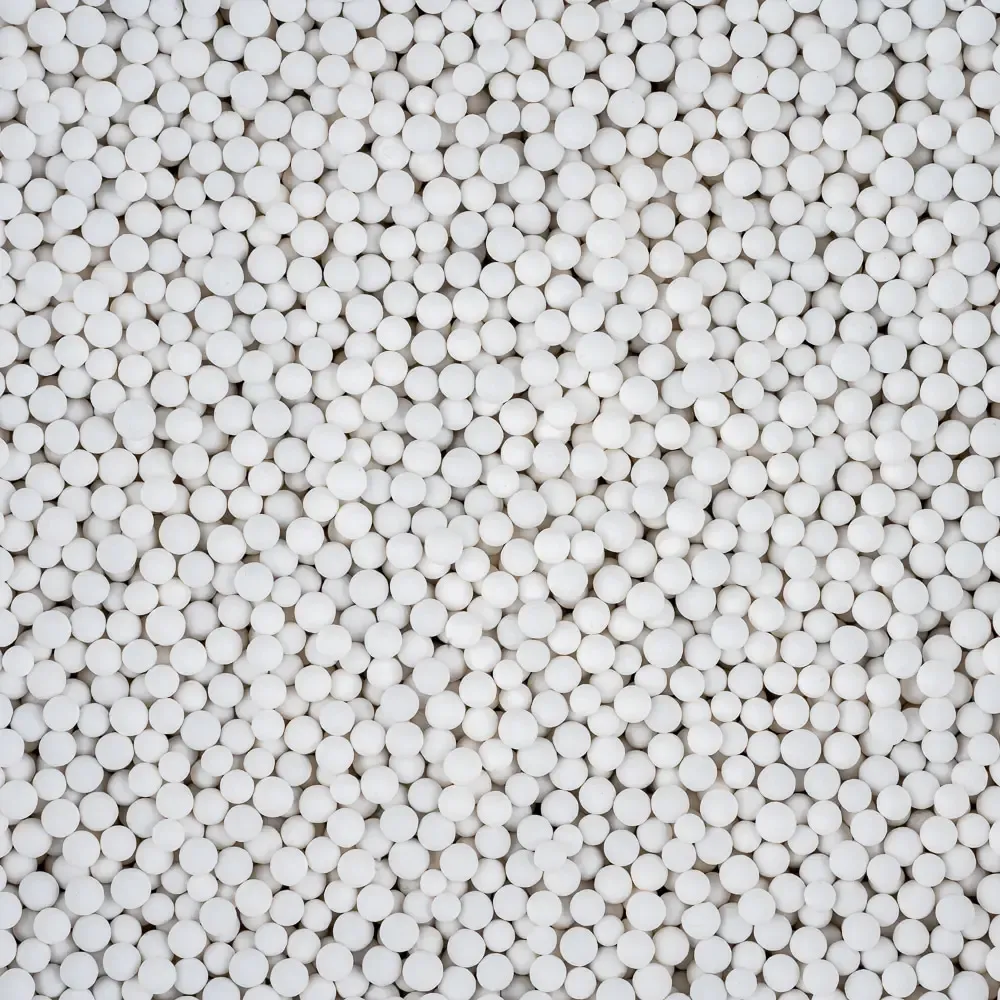
Products used in this industry
07 Case studies
Proven in plants like yours
Cases tagged to this application appear here automatically.
Case studies for this application will be published here.
08 From our plant
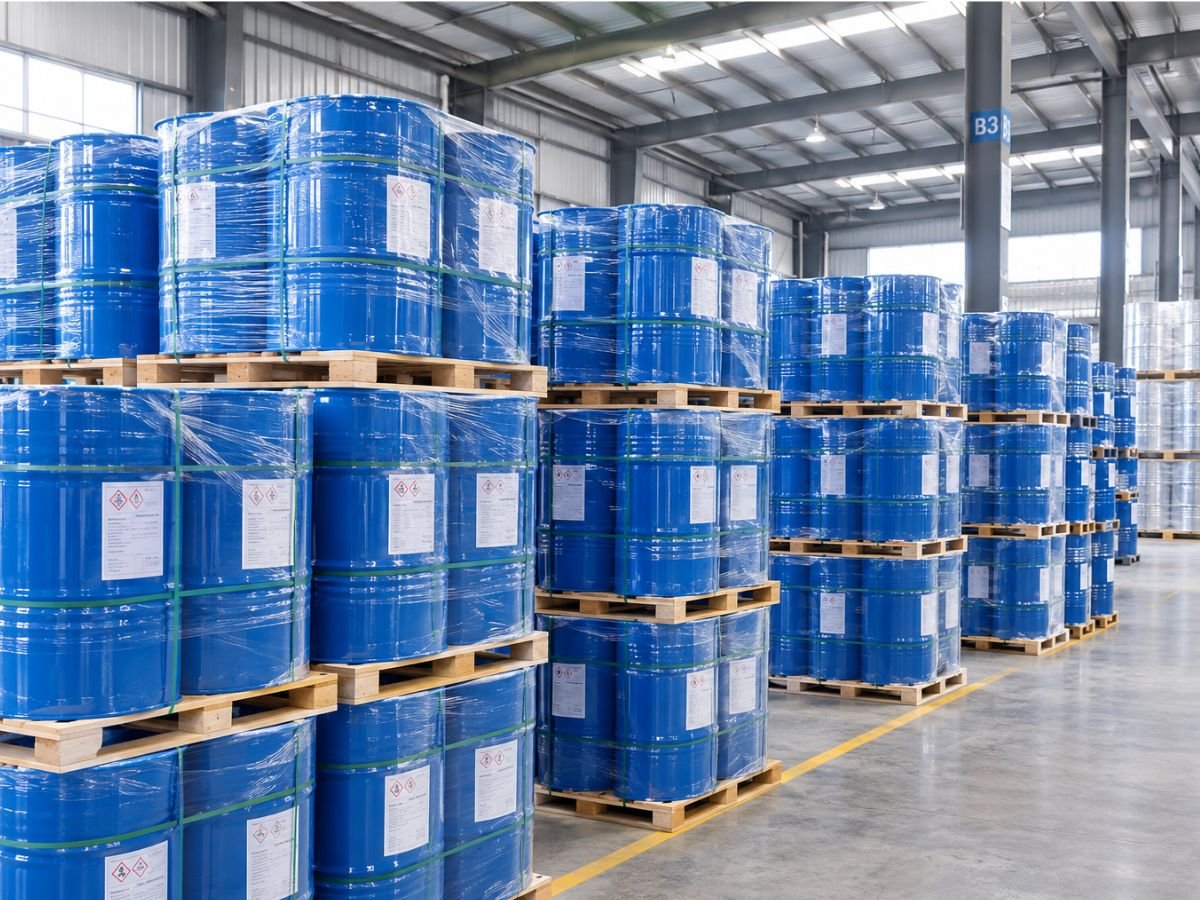
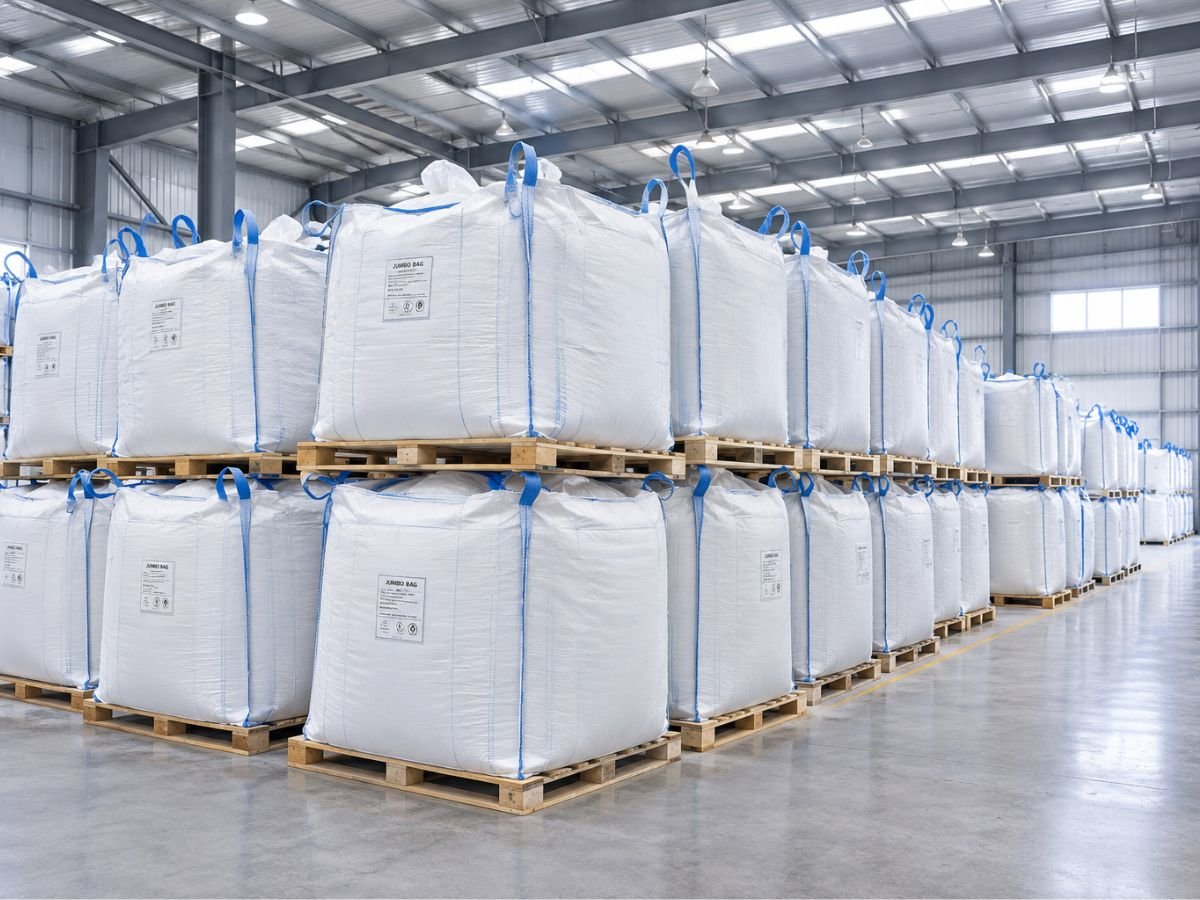
What you receive
The adsorbent, the packing and the plant it ships from.

Which molecular sieve is used in air separation pre-purification?
13X APG Molecular Sieve is the standard grade for co-adsorbing water and CO₂ ahead of the cold box; CaX Molecular Sieve is added where N₂O must be removed.
What is the difference between Li-LSX and 13X for oxygen?
Li-LSX has much higher N₂/O₂ selectivity, so it produces more oxygen per kilogram of sieve and suits compact concentrators and VPSA plants.
Which grade is used in PSA hydrogen units?
5A Molecular Sieve is the main layer for CO, CH₄ and N₂, combined with activated alumina and other layers depending on the feed.
Do you supply sieve for portable oxygen concentrators?
Yes. Li-LSX in Ø 0.4–0.8 mm beads suits portable concentrators.