
Home › Applications › Refining & petrochemicals
Industry
Adsorbents for Refining & Petrochemicals
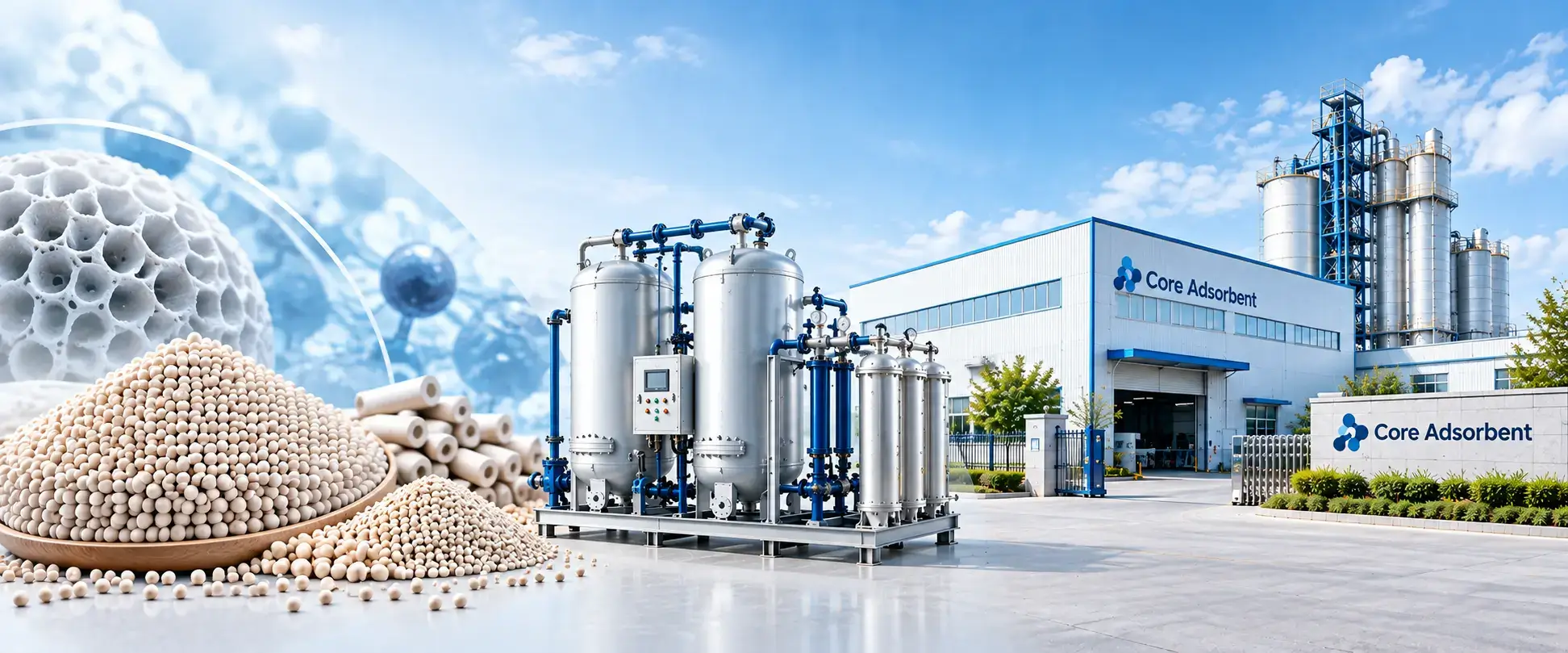
Core Adsorbent supplies molecular sieves and inert ceramic balls for olefin and cracked-gas drying, ethanol dehydration, n-paraffin separation, CO recovery and catalyst bed support.
3 Å
Pore that excludes olefins
≈ 95 %
Ethanol azeotrope limit
Ø 3–50 mm
Ceramic ball sizes
15–35 days
Delivery time
01 Overview
Where are adsorbents used in refineries and petrochemical plants?
Refineries and petrochemical plants use 3A Molecular Sieve to dry olefins and cracked gas without co-adsorbing the product, 5A Molecular Sieve to separate normal paraffins, copper-exchanged adsorbent to recover CO from syngas, and Inert Alumina Ceramic Ball to support and hold down catalyst and adsorbent beds.
02 Product solutions
Adsorbent solutions for refining and petrochemicals
Every solution page tagged to this application appears here automatically.
-
Solution
Molecular Sieve for Ethanol Dehydration
View solution →: Molecular Sieve for Ethanol DehydrationCore Adsorbent supplies 3A molecular sieve for dehydrating ethanol beyond the azeotrope to fuel-grade and anhydrous specifications in PSA and TSA units.
-
Solution
Molecular Sieve for n-Paraffin Separation
View solution →: Molecular Sieve for n-Paraffin SeparationCore Adsorbent supplies 5A molecular sieve for separating normal paraffins from branched and cyclic hydrocarbons by molecular size.
-
Solution
Molecular Sieve for Olefin and Cracked Gas Drying
View solution →: Molecular Sieve for Olefin and Cracked Gas DryingCore Adsorbent supplies 3A molecular sieve for drying cracked gas, ethylene and propylene without co-adsorbing the olefins.
03 Challenges
What goes wrong in refinery and petrochemical drying?
Four problems that cost product, catalyst life or run time.
Product co-adsorption
Drying olefins on 4A or 13X co-adsorbs product that can polymerise during regeneration.

The ethanol azeotrope
Distillation stops at about 95 % ethanol.
Bed support failure
Broken or wrongly sized support media let catalyst migrate.
Contaminants in syngas
CO and other impurities limit hydrogen purity and poison catalysts.
04 How it works
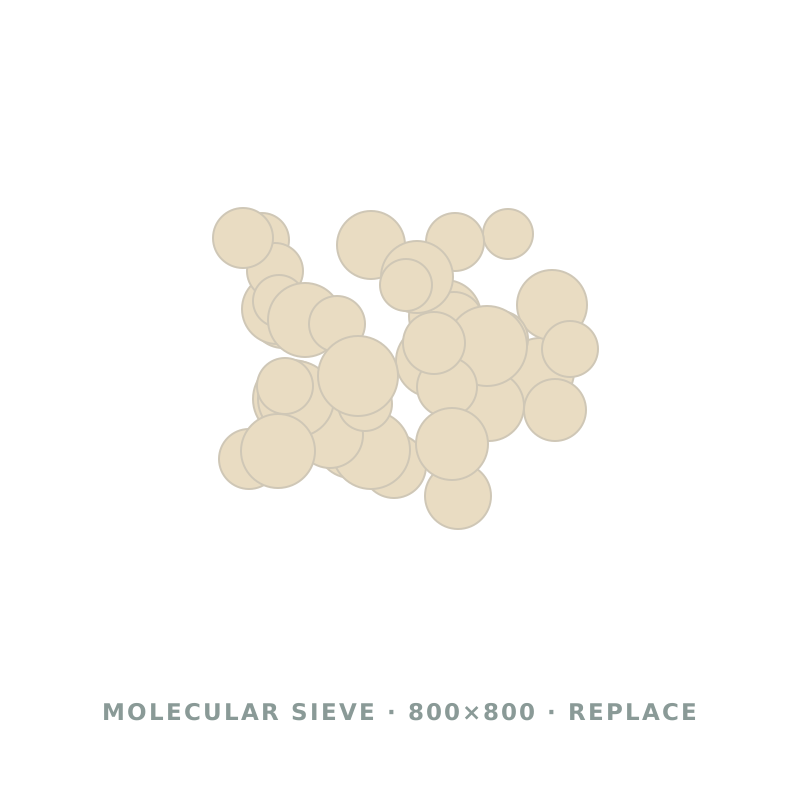
Graded ceramic ball support in a fixed bed
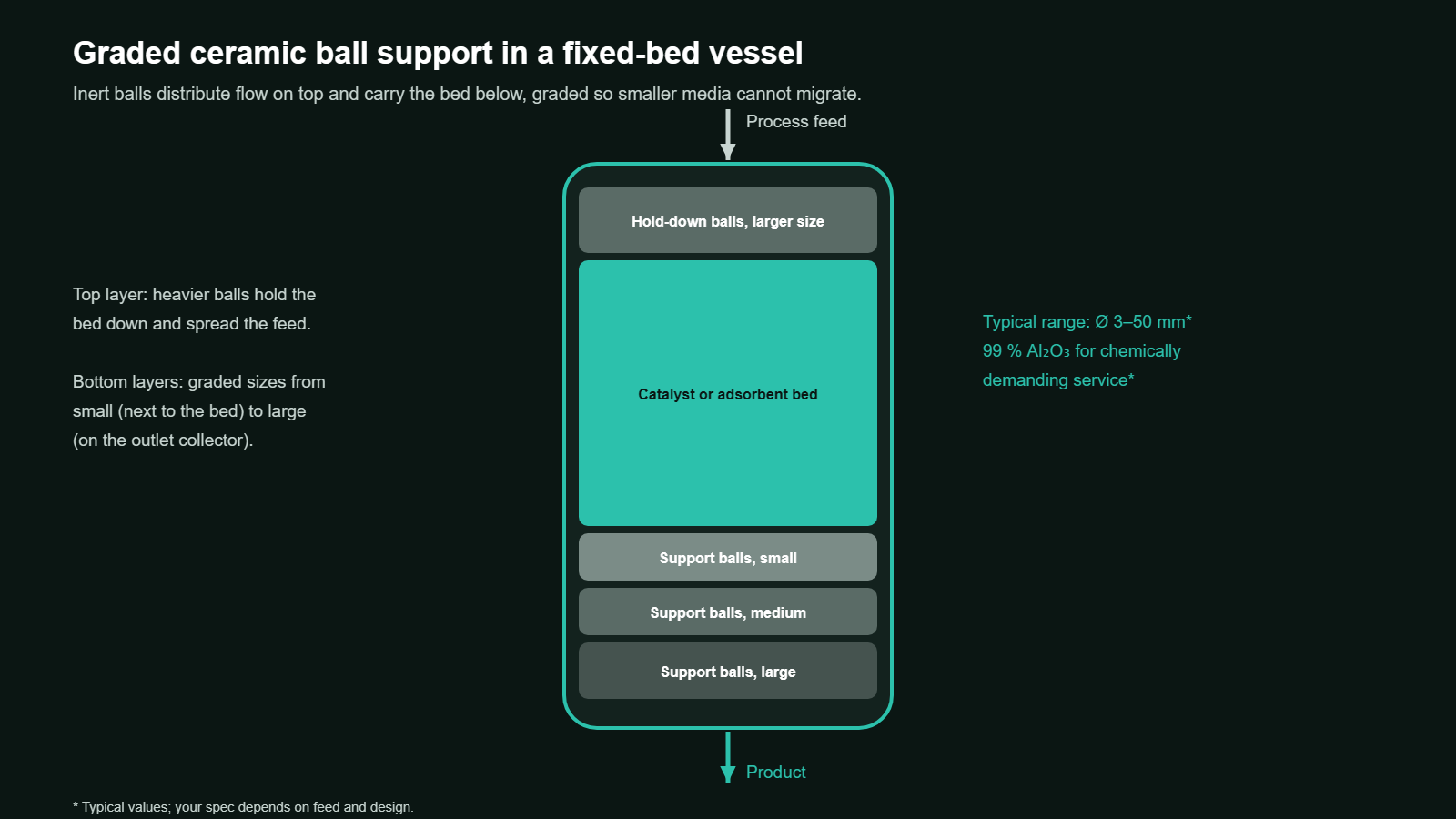
3 Å
3A pore excludes ethylene and propylene
≈ 95 %
Ethanol limit of distillation
5 Å
5A admits normal paraffins only
Ø 3–50 mm
Ceramic ball sizes
Typical industry values; final grade and layer design depend on your feed and vessel.
05 Selection guide
Refining and petrochemical adsorbent selection table
Full specifications are on each product page.
| Product | Use | Key figure |
|---|---|---|
| 3A Molecular Sieve | Olefin, cracked-gas and ethanol drying | 3 Å pore |
| 5A Molecular Sieve | n-Paraffin separation; PSA hydrogen | 5 Å pore |
| CO Adsorbent Molecular Sieve | CO recovery from syngas | Cu(I) sites |
| 13X Molecular Sieve | LPG and liquid treating | ≈ 10 Å pore |
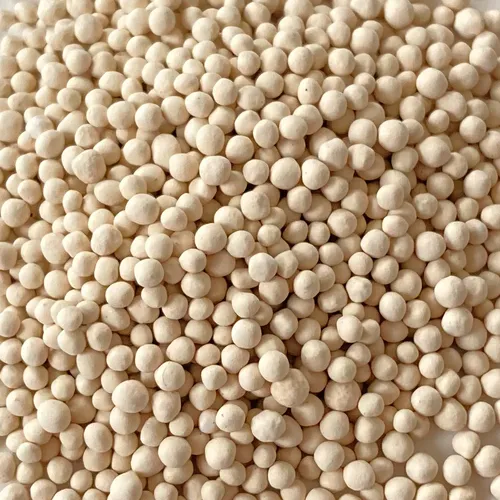
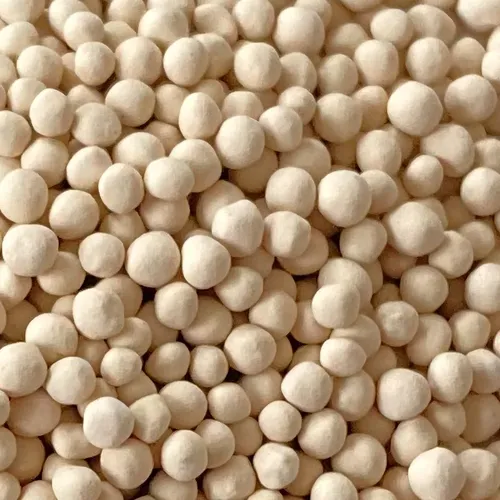
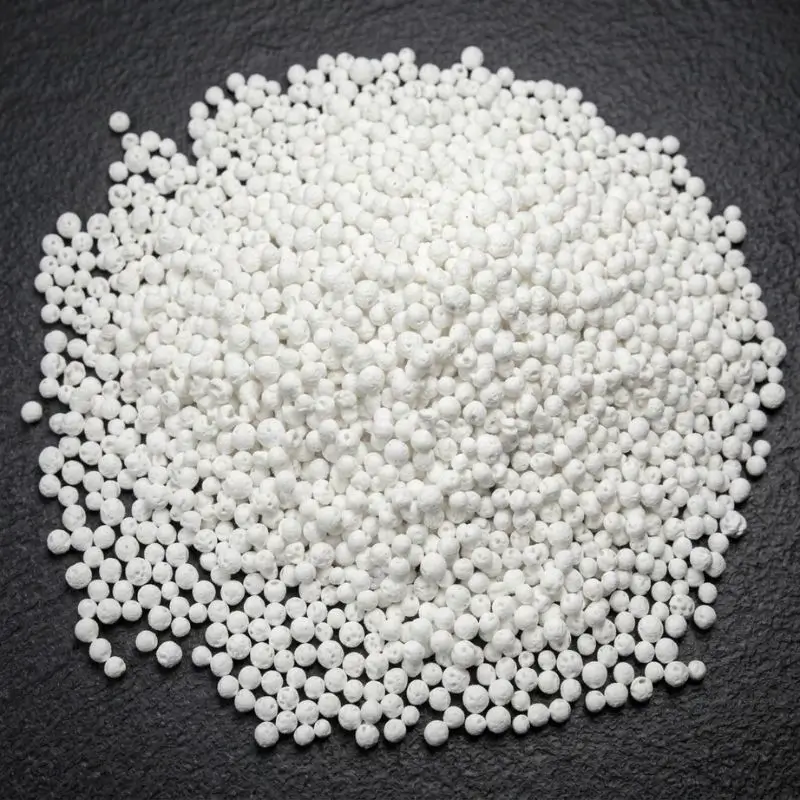
| Inert Alumina Ceramic Ball | Catalyst and adsorbent bed support | 17–99 % Al₂O₃ |
06 Recommended products
Products used in this industry
07 Case studies
Proven in plants like yours
Cases tagged to this application appear here automatically.
Case studies for this application will be published here.
08 From our plant
What you receive
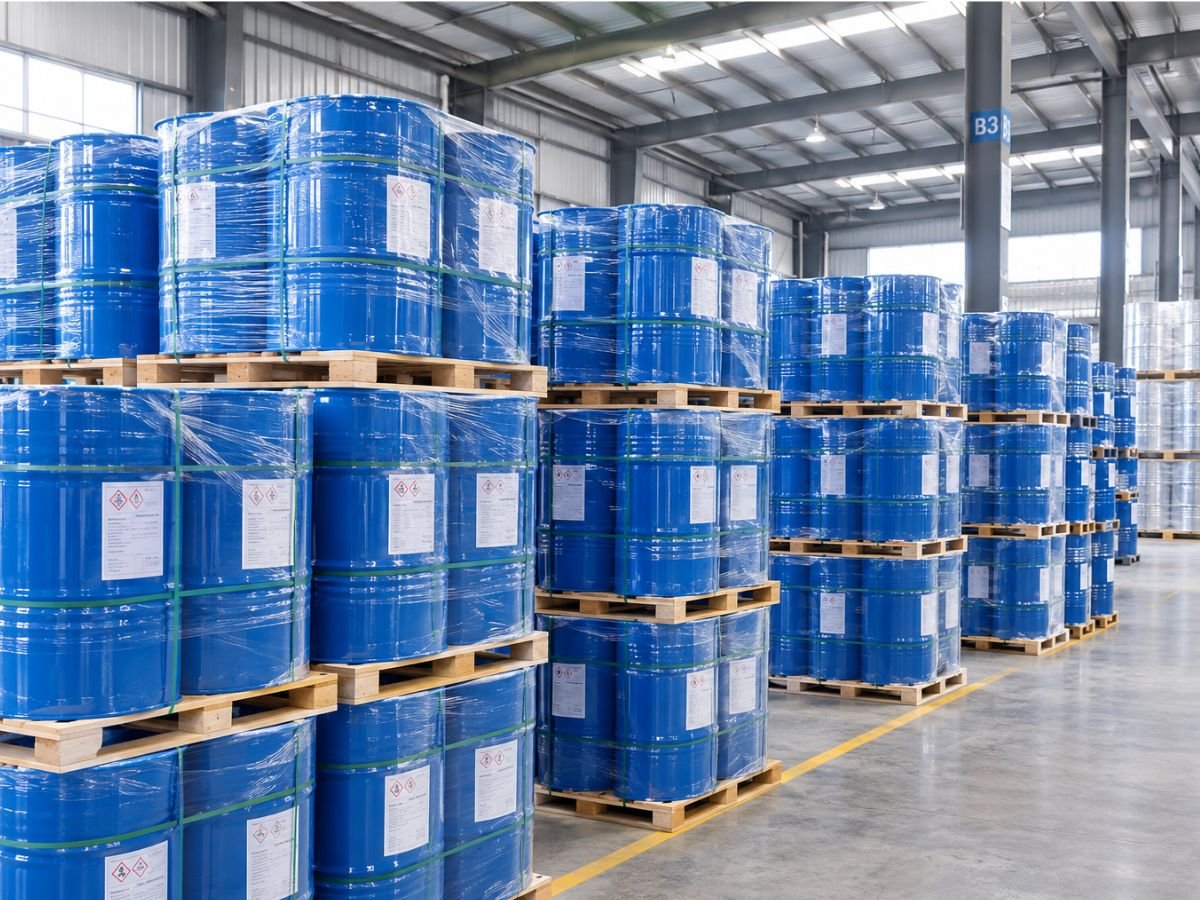
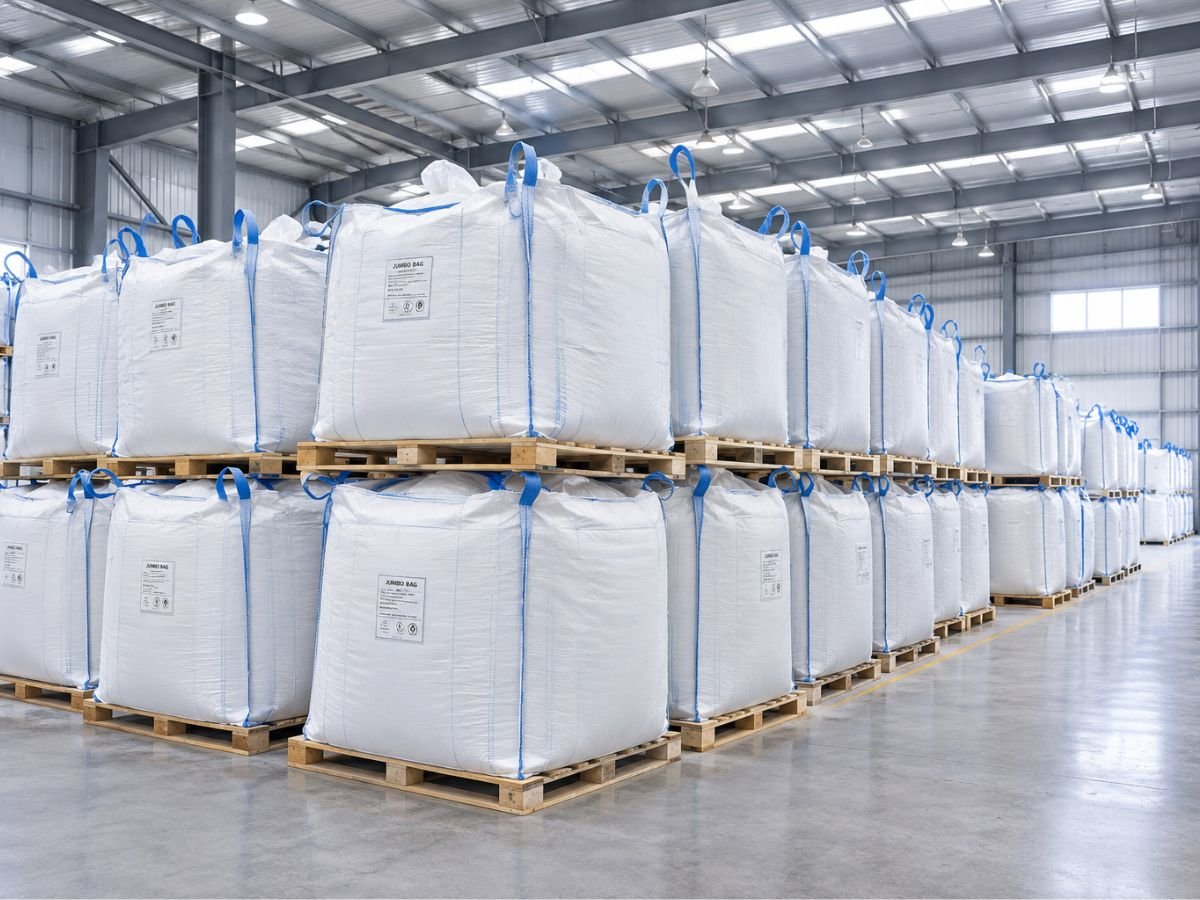
The adsorbent, the packing and the plant it ships from.

Why is 3A used for olefin drying?
Its 3 Å pore admits water but excludes ethylene and propylene, so the product is not co-adsorbed.
What ceramic balls are used for catalyst bed support?
High-alumina inert balls in graded sizes; 99 % Al₂O₃ grades where chemical inertness matters.
Why can’t distillation alone produce fuel-grade ethanol?
Ethanol and water form an azeotrope at about 95 %; 3A Molecular Sieve removes the remaining water.
Can you match the adsorbent we use now?
Send its data sheet and conditions; we reply with an equivalent grade, TDS and quote.