
Home › Applications › Natural gas & energy › Molecular Sieve for LNG Pretreatment
Molecular Sieve for LNG Pretreatment
Core Adsorbent supplies 4A molecular sieve, activated alumina and inert ceramic balls for LNG pretreatment, drying feed gas below 0.1 ppmv water ahead of liquefaction.
< 0.1 ppmv
Outlet water before liquefaction
4A
Main dehydration layer
15–35 days
Delivery time
1 t
MOQ per grade
01 Overview
What molecular sieve is used for LNG pretreatment?
LNG pretreatment uses 4A molecular sieve as the main dehydration layer to dry feed gas below 0.1 ppmv water, with an activated alumina guard layer and inert ceramic balls as support and hold-down. 3A or a low-COS grade is used where H₂S and CO₂ are present together.
| Main layer | 4A Molecular Sieve, beads |
| Alternative | 3A or low-COS grade with H₂S + CO₂ |
| Guard layer | Activated Alumina Desiccant |
| Support and hold-down | Inert Alumina Ceramic Ball, graded |
| Outlet target | < 0.1 ppmv water (typical) |
| Regeneration | Temperature swing, about 230–290 °C for 4A (typical) |
02 Challenges
What goes wrong in LNG pretreatment dryers?
Four issues decide whether the dryer protects the cold box for its full design life.
Freezing in the cold box
Water that breaks through freezes in the main cryogenic exchanger and forces a warm-up.

Regeneration damage
Hot, wet regeneration and reflux can break beads, cutting capacity and raising pressure drop.
COS formation
With H₂S and CO₂ present, a standard 4A bed can form carbonyl sulphide that ends up in LPG.
Upstream upsets
Amine or liquid carry-over fouls the top of the bed unless a guard layer protects it.
03 Solutions
Recommended grades for each LNG application
01
Large onshore LNG trains
Typical requirement: long cycle life, low pressure drop, < 0.1 ppmv water
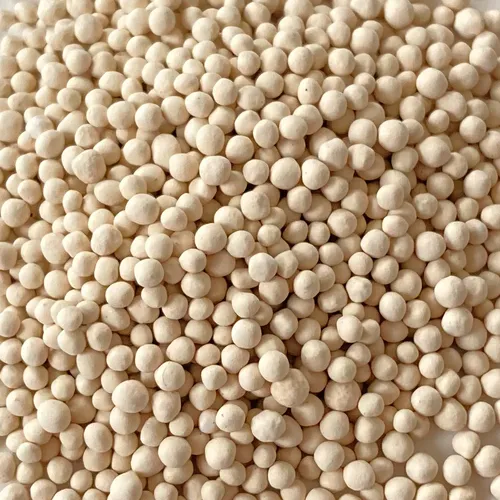
- 4A Molecular Sieve — Ø 3.0–5.0 mm beads for large towers
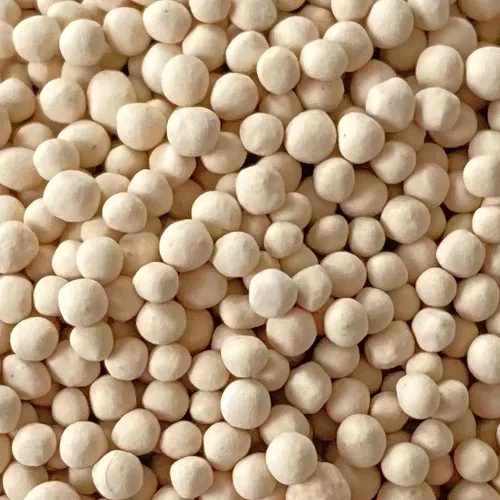
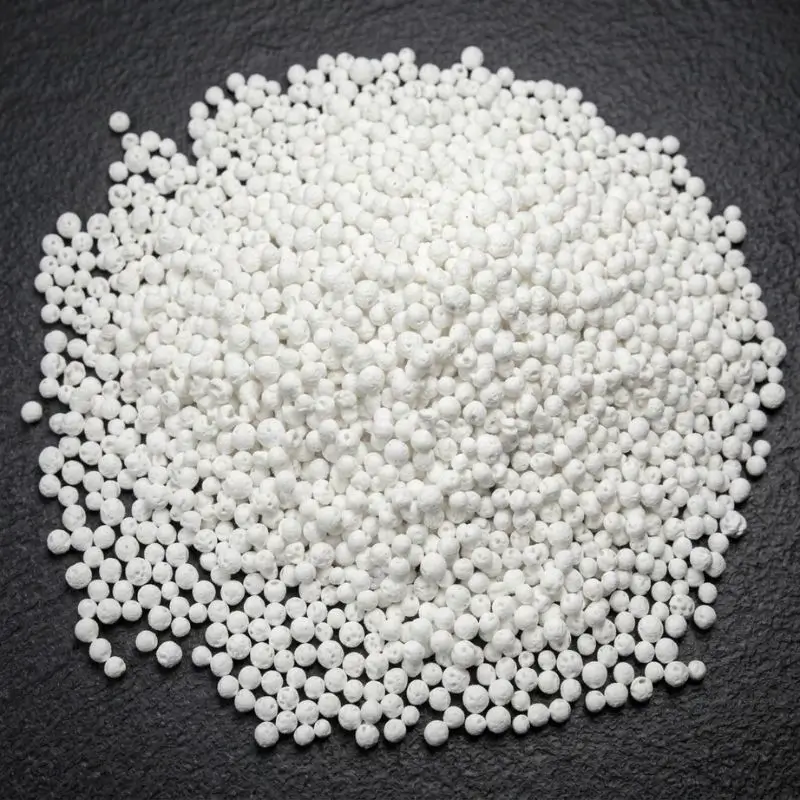
- Activated Alumina Desiccant — guard layer against carry-over
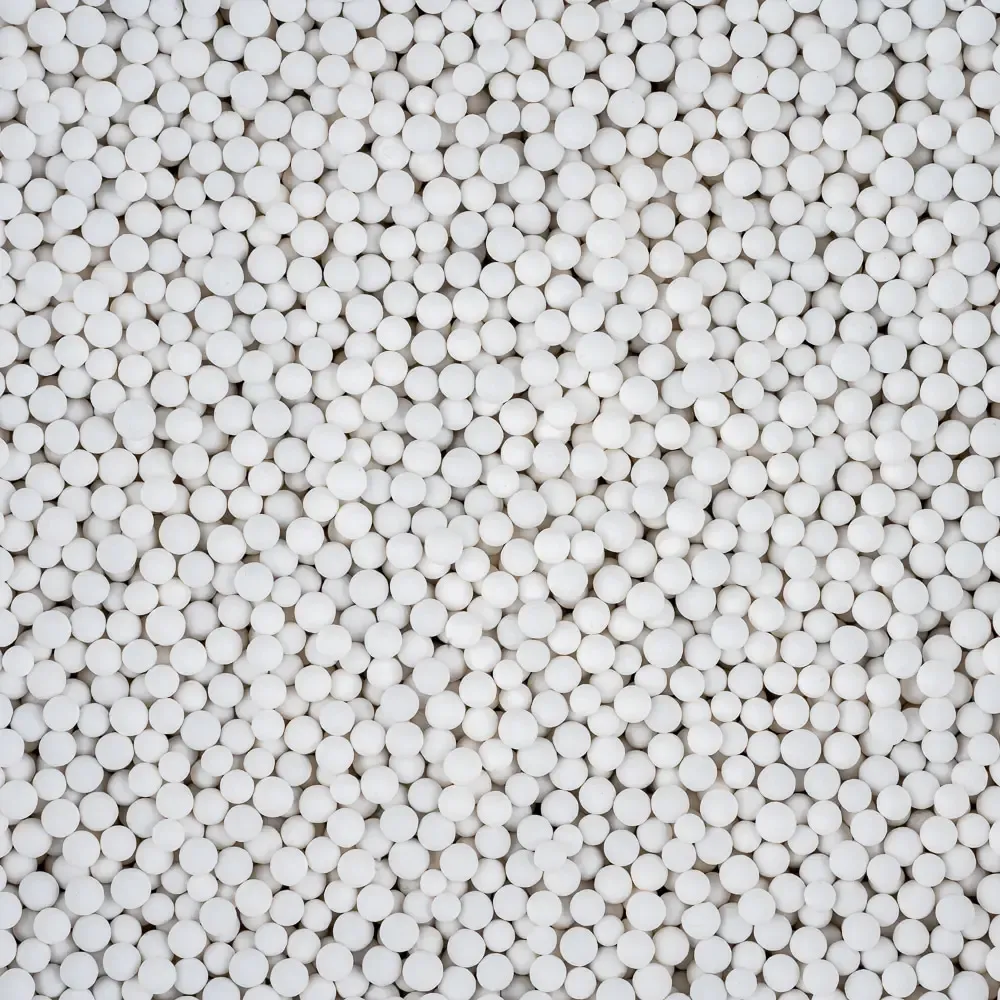
- Inert Alumina Ceramic Ball — graded support and hold-down
02
Small-scale and peak-shaving LNG
Typical requirement: compact dryers, frequent cycling
- 4A Molecular Sieve — Ø 1.6–2.5 mm beads for faster mass transfer
- 3A Molecular Sieve — where methanol is present upstream
03
Sour feed gas
Typical requirement: dry gas with H₂S and CO₂ without forming COS
- 3A Molecular Sieve — limits co-adsorption and COS formation
- 13X Molecular Sieve — extra layer where mercaptans must be removed
04 Bed configuration
Typical LNG dehydration bed, top to bottom
Feed flows down; layer heights depend on flow, pressure and inlet water.
| Layer | Product | Function |
|---|---|---|
| Hold-down | Inert Alumina Ceramic Ball, larger size | Spreads the feed and stops bed movement |
| Guard | Activated Alumina Desiccant | Takes free water, liquids and acids first |
| Main | 4A Molecular Sieve | Dries the gas to the outlet specification |
| Support | Inert Alumina Ceramic Ball, graded small to large | Carries the bed and protects the outlet collector |
05 Key properties
4A molecular sieve data for LNG dryers
≥ 22.5 %
Static water adsorption (RH 75 %, 25 °C)
4 Å
Admits water, excludes propane and heavier
Ø 1.6–5.0 mm
Bead sizes for small and large towers
COA
Lot test report with every shipment
Outlet and regeneration values are typical for the industry; see the molecular sieve dehydration technology profile. Full data: 4A Molecular Sieve.
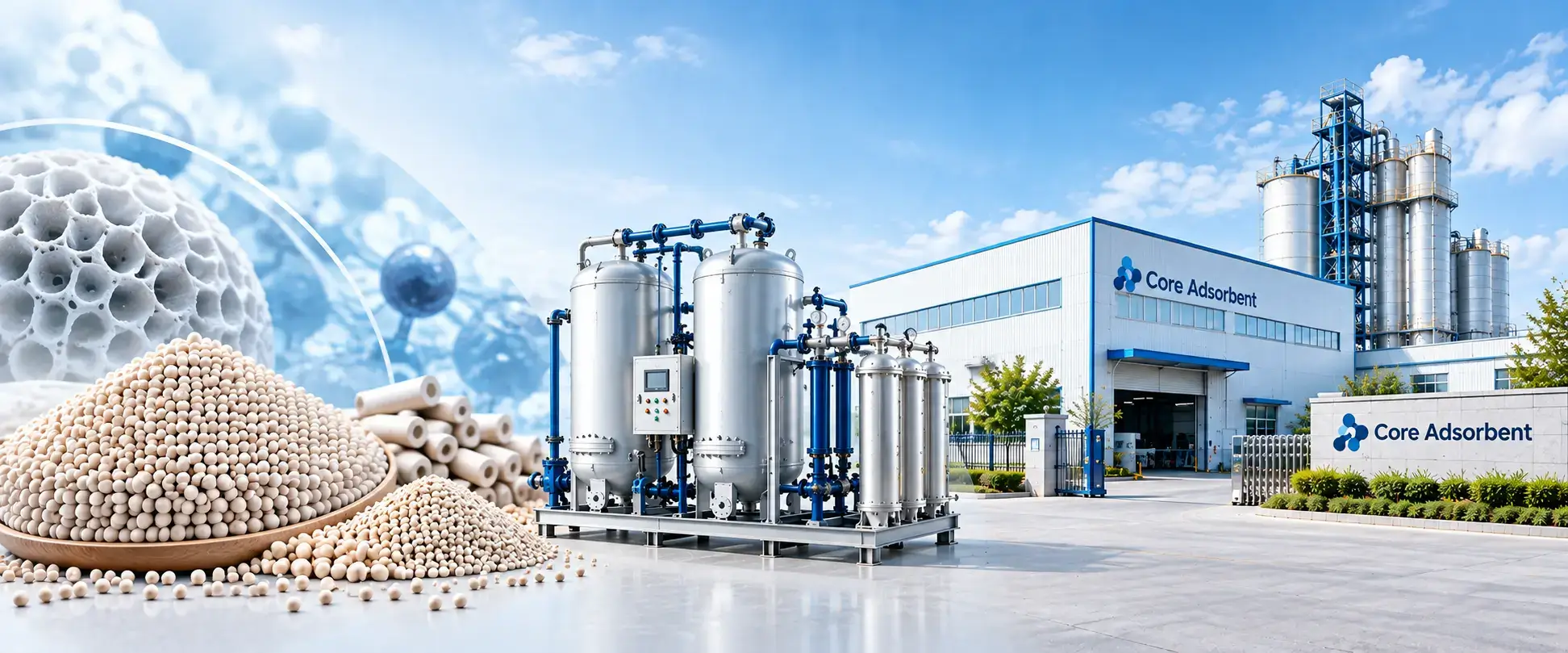
06 From our plant
What you receive
The adsorbent, the packing and the plant it ships from.
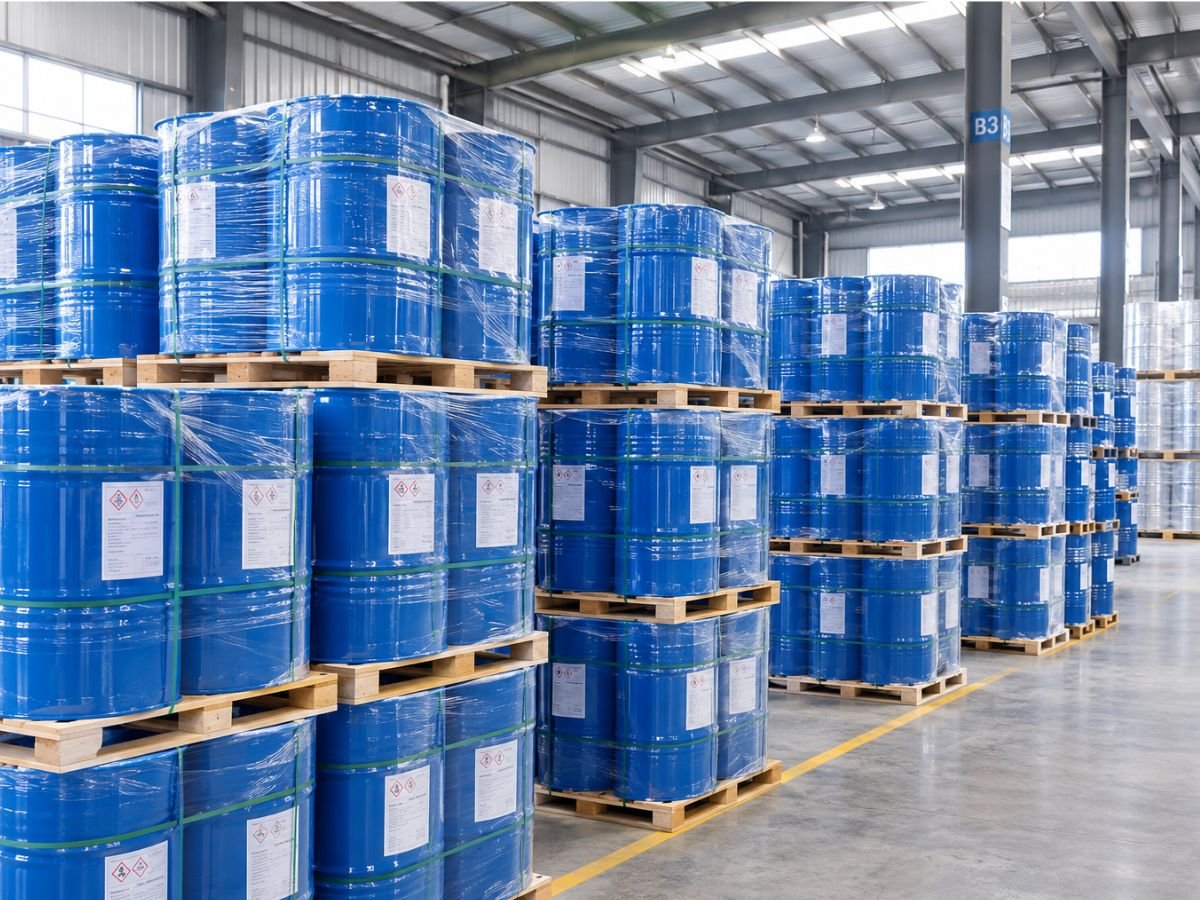
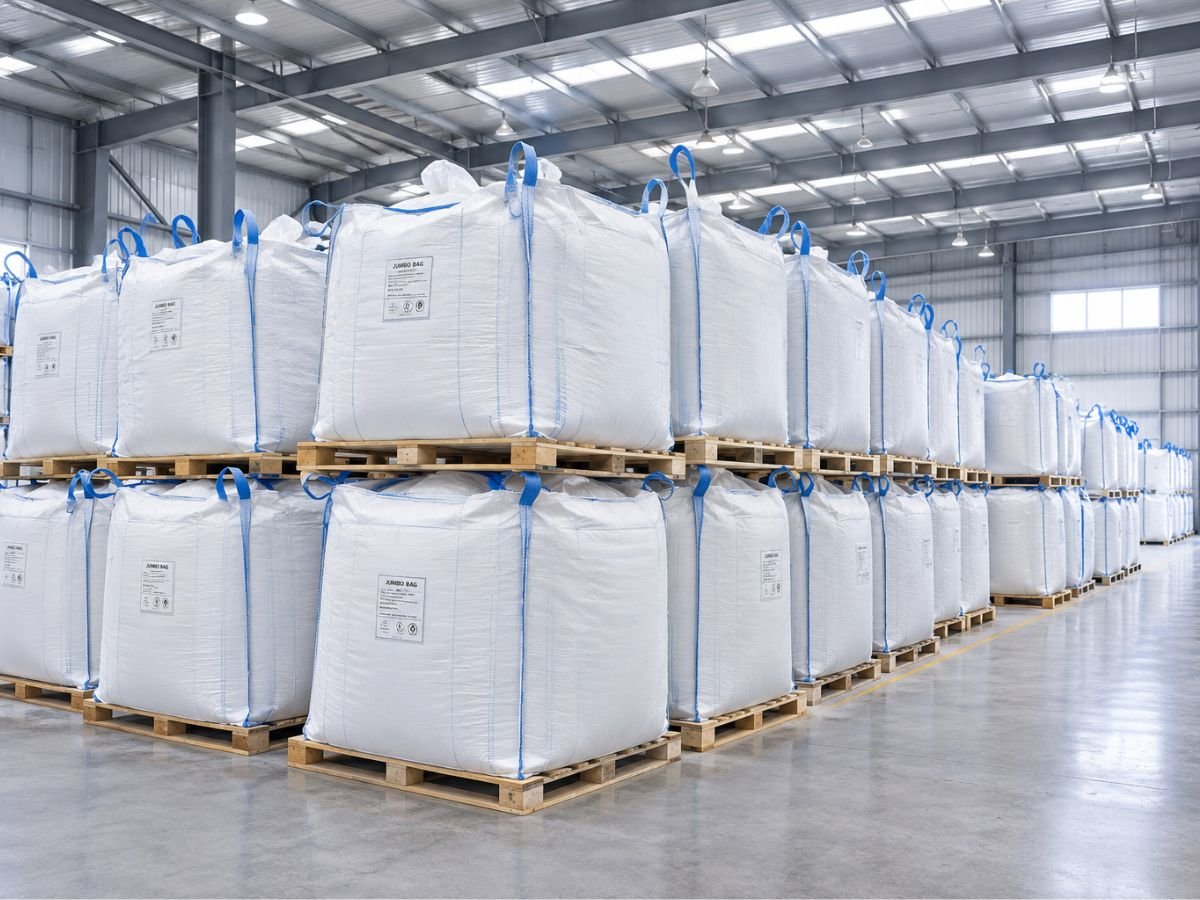

Photos are replaced with real product, packing and plant images as they become available.
07 Support
Customisation and engineering support
- Bed loading proposal — send flow, pressure, temperature and inlet water; we propose layer heights and bead sizes.
- Grade matching — send the data sheet of the sieve you use now; we propose an equivalent grade.
- Complete bed supply — sieve, alumina guard and ceramic balls in one shipment, under one COA system.
- Packing — steel drums or jumbo bags, sealed against moisture; samples from 5–10 kg.
08 Related solutions
More natural gas and energy solutions
09 Recommended products
Products for LNG pretreatment
Which molecular sieve is best for LNG pretreatment?
4A is the standard main layer. Use 3A or a low-COS grade when the feed contains H₂S and CO₂ together.
How dry must the gas be before liquefaction?
Typically below 0.1 ppmv water, so no water reaches the cryogenic heat exchanger.
Why add activated alumina on top of the sieve?
It takes free water and liquid carry-over from upstream units first, protecting the sieve and extending bed life.
Which bead size should I use?
Ø 3.0–5.0 mm beads keep pressure drop low in large towers; Ø 1.6–2.5 mm beads give faster mass transfer in smaller, short-cycle dryers.
Can you supply the full bed for a change-out?
Yes — 4A Molecular Sieve, Activated Alumina Desiccant and Inert Alumina Ceramic Ball together, sized to your vessel and shipped in one container.